How to write the perfect booth brief? The guide for your exhibition design agency

CONTENT

Reading time:

You’ve booked your spot at a major trade show. Congratulations, that’s the first step… The second, and often the most crucial, is choosing your exhibition design agency partner and creating the design.

In order for an exhibition design agency like R2 Stand to offer you a “wow” project that is relevant and profitable, it needs high-quality raw material: the brief (or specifications).

An incomplete brief leads to unnecessary back-and-forth, creative disappointment, and wasted time. Conversely, a structured brief accelerates performance.

Here’s how to prepare the ideal brief for your future booth design.

Why the brief (or specifications) for your booth is the most essential step in your booth design project

The exhibition design agency is not just a constructor, but also a commercial architect. To translate your strategy into volume and space, they need to understand your challenges. A good brief allows you to:

  1. Save time: By fully understanding the challenges and objectives of your presence at the trade show from the very first 3D sketch.
  2. Optimize your budget: By avoiding proposing overpriced materials or technologies… while still creating an eco-friendly booth that meets your CSR requirements.
  3. Stand out: By giving designers the keys to your brand DNA.

1. The context and brand identity at your booth

Before talking about partitions, furniture, or foot traffic flow, talk about yourself.

Who are you and what story do you tell?

Your booth is your temporary embassy; it must convey your values, your identity, and your message.

  • Your business: What do you sell and what is your position in the market? What are your competitive advantages? What is your brand image?
  • Your graphic charter: Logos, color codes, fonts (vector and PDF files).
  • Brand tone: Are you institutional, playful, tech-savvy, eco-friendly?
  • Your competitors: Who will be your neighbors at the trade show? (So we can do better than them!).

Réaliser un brief parfait pour créer son stand

2. Marketing objectives and targeting at the trade show

A booth’s architecture varies depending on its purpose.

Brand awareness or lead generation: design makes all the difference

Clearly define your top priority:

  • Image/brand awareness: You want to be seen from afar. We will focus on tall, slung signs, spectacular design, and open areas.
  • Business/leads objective: You want to sign contracts. We will design private areas, closed VIP lounges, and numerous reception counters. Find best practices for generating leads at your booth
  • Product launch objective: The product must be the star. We will create podiums, display cases, and focused lighting.

Also define your target audience: Are you targeting CEOs, salespeople, or technicians? The more specific your objectives are, the better the exhibition design agency will be able to tailor the design of your booth to achieve them.

3. Technical constraints and the location of its booth

This is the essential “technical” part for costing the project. Provide your exhibition design agency with the technical plan from the organizer as soon as possible.

Surface area, flow, and trade show regulations

Indicate the following in your specifications:

  • The name of the trade show, the location, and the dates.
  • The booth number and surface area (m²).
  • The configuration: Island (open on 4 sides), corner (2 sides), or row (only 1 side open). This radically changes the design possibilities.
  • Height restrictions: Can structures be suspended from the ceiling? What is the maximum height allowed?
  • The specifications provided by the trade show organizer: even though our teams are very familiar with the largest exhibition halls, it is important to provide this information… to avoid unpleasant surprises 😉

4. Budget and schedule

A subject that is sometimes taboo… but nevertheless ESSENTIAL.

Budget transparency is vital when creating a booth.

Many exhibitors don’t dare to give a budget, hoping to “pay less.” This is a strategic mistake.

When it comes to custom-made booths, anything is possible: from simple carpeted floors to solid oak parquet, from standard TV screens to giant LED walls.

Providing a budget range (for example, between $15k and $20k, or $40k and above) allows the designer to immediately offer the best value for money, without selling you an unattainable dream or a project that does not reflect your image.

Don’t forget to indicate the deadline for submitting the 3D proposal.

5. Booth features and zoning

Finally, list the functional requirements you envisage for your booth and a typical day:

  • Front desk: Reception desk, need for hostesses?
  • Reception: How many bar tables? A lounge area with sofas? A closed meeting room?
  • Demonstration: Screens, podiums, tablet stands, physical presentation of heavy products?
  • Logistics: Do you need a storage area (for goodies, cloakroom, refrigerator, coffee maker)? How big?

The R2 Stand Checklist to ensure a successful trade show presence

Here is a short checklist of essential points for a brief, a set of specifications for the perfect booth brief:

Date and location of the trade show
Layout plan provided by the trade show organizer at the time of your reservation
Graphic charter and logo
Your approximate budget
Main objective: Image, brand awareness, business, customer relations, etc.
List of essential furniture (e.g., 3 tables, 1 storage unit)
Response deadline

A booth project?

You can contact the R2 Stand team to discuss your booth project and work together to find the best option for achieving your goals at your future trade show.

Find inspiration to design your future booth

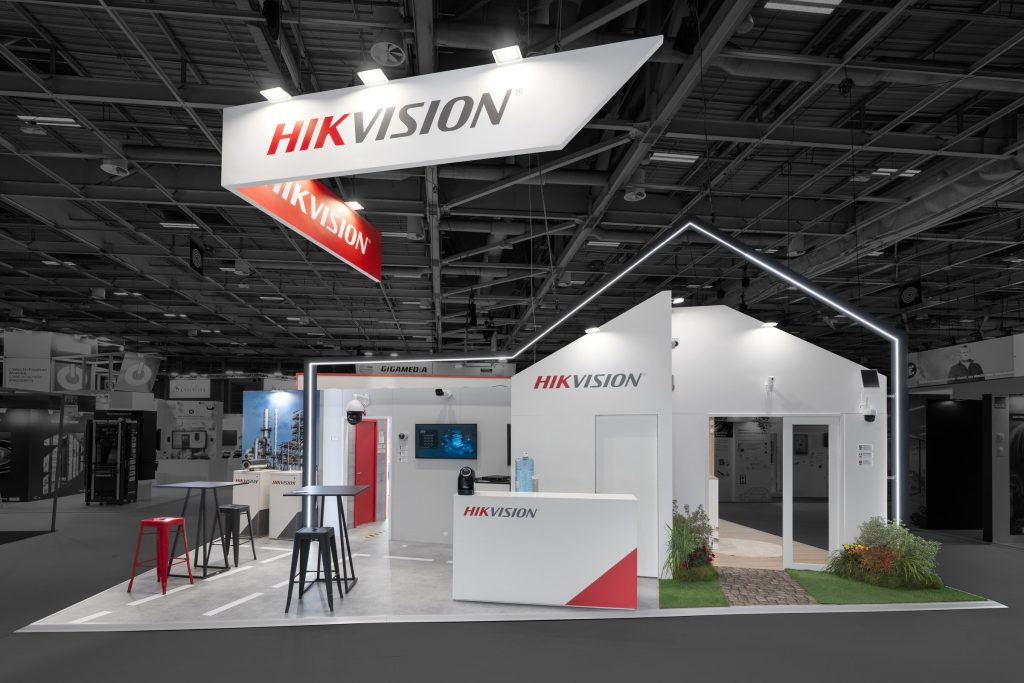
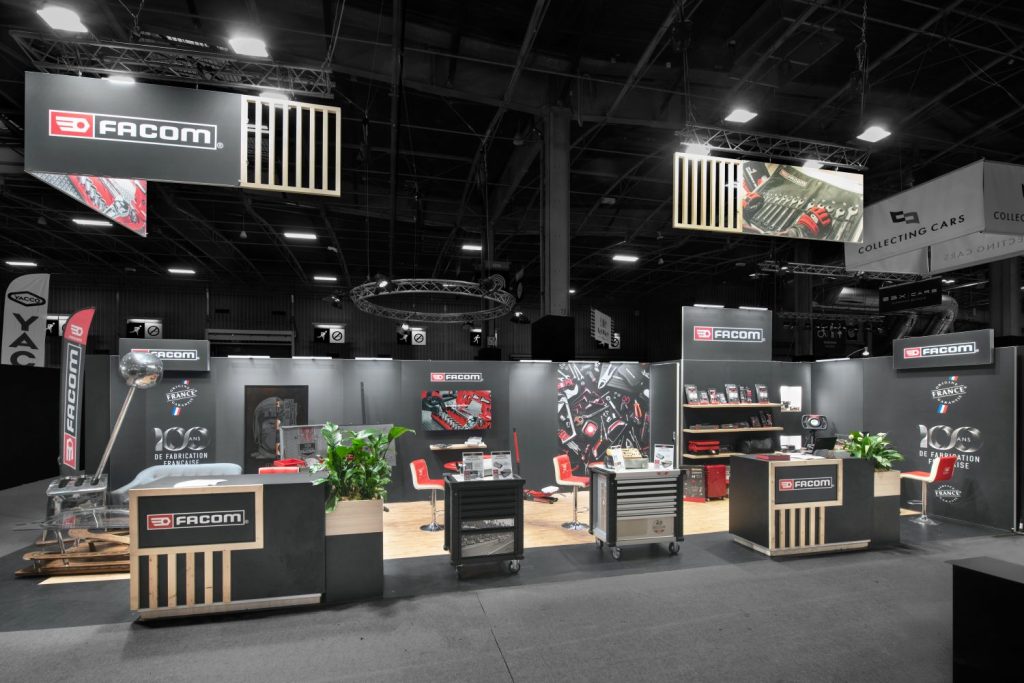
With over 15 years of experience, R2 Stand is a true expert in exhibition design: you can browse the agency’s portfolio of projects and read testimonials from clients who have successfully participated in trade shows to inspire you.
FAQ

Prepare your custom-made booth design with an effective brief

When should you send your brief to the exhibition design agency?

Ideally, you should start 3 to 5 months before the trade show. This allows time for creating the 3D design, making adjustments, manufacturing in the workshop, and managing technical orders (electricity, slings) with the exhibition center.

Comparing is normal. However, consulting more than two or three agencies is often counterproductive.

You will receive too many different proposals and waste time analyzing them. Select two or three experts whose “portfolio” you like and give them a precise brief.

For a modular booth, the brief is mainly technical (need for shelves, partitions).

For a custom-made booth (traditional carpentry), the brief must focus much more on brand image, storytelling, and visitor experience, as the creative possibilities are endless.

You can find all upcoming trade shows where R2 Stand will assist you in designing, creating, and setting up your booth.

To go further…

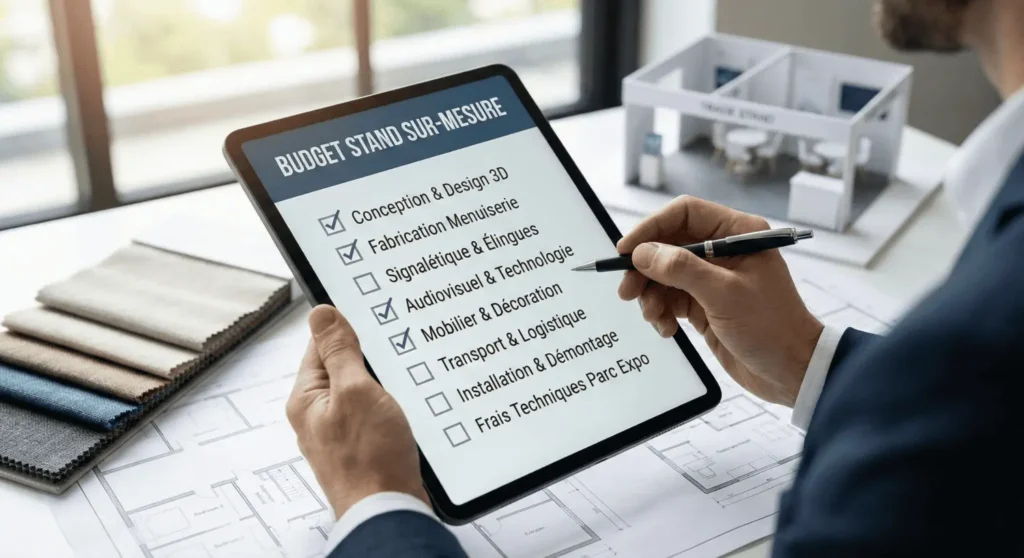
How much does it cost to create a custom-made booth? The budget guide SOMMAIRE Temps de lecture : Participating in a trade show is an exceptional growth driver, but it is also a major investment. When drafting the specifications, a

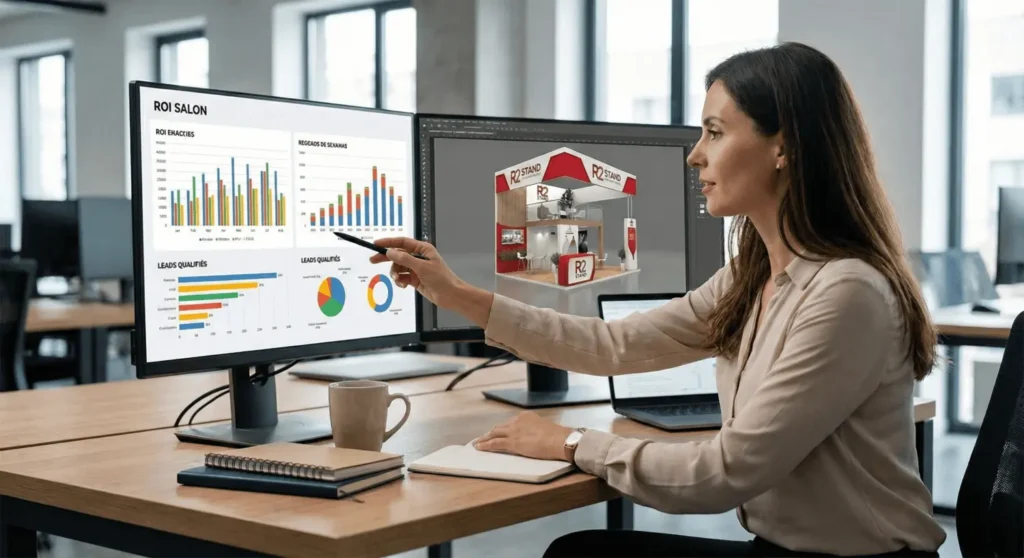
Measuring the ROI of your trade show presence: Essential KPIs for your booth SOMMAIRE Temps de lecture : Participating in a trade show (renting space, designing a booth, travel expenses) represents a significant portion of the annual marketing budget. However,

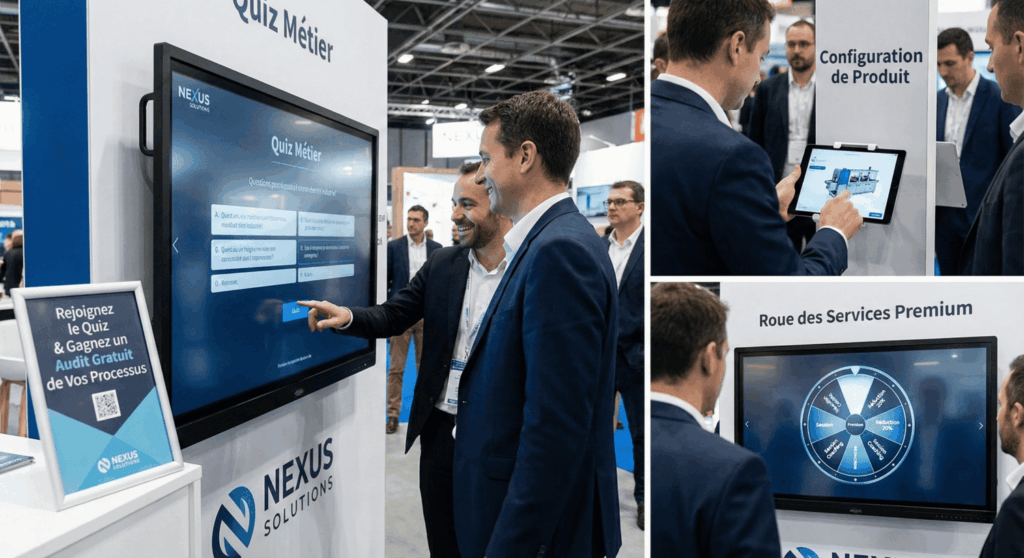
Participating in a trade show represents a significant strategic and financial investment for a company. For this event to be profitable (ROI), simple visibility is no longer enough: the number one goal is to generate qualified leads. As an expert