3 eco-friendly habits to adopt at your booths

SOMMAIRE

Temps de lecture : 

What if your booth became a showcase for your commitments?

A trade show typically lasts 3, 4, or 5 days. But behind those few days lie weeks of production, materials that are sometimes thrown away as soon as the show is taken down, tons of waste generated across an entire hall, and a carbon footprint that few exhibitors truly confront.

You don’t need to overhaul everything at once; just a few well-established practices incorporated into your process are enough to make a real difference—and often, to make a good impression on visitors who are increasingly sensitive to these issues.

Here are the 3 best practices we at R2 Stand recommend to all our clients who want to exhibit in a more responsible way.

1. Design a booth built to last, not to be thrown away

This is undoubtedly the most significant factor, yet the least visible from the outside: the way a booth is designed from the outset determines its entire environmental footprint.

Go for a modular approach

A modular booth is one that can be dismantled, stored, reconfigured for another trade show, and adapted to a different floor plan without having to start from scratch. In contrast, a booth designed for a single event often ends up in the trash the day after it’s taken down.

At R2 Stand, we design structures intended to be reused multiple times, sometimes for several years. The design can be updated—including graphics, colors, and layouts—without having to replace the basic structure each time.

Choose sustainable materials

Recycled aluminum, FSC-certified wood, recycled PET fabrics, water-based ink printing… Alternatives exist and don’t compromise the visual quality of the booth. Just ask your exhibition design agency about them right from the initial briefing.

A good habit: during the design phase, always ask your vendor, “What is the more sustainable alternative to this material?” If they can’t answer, that’s a red flag

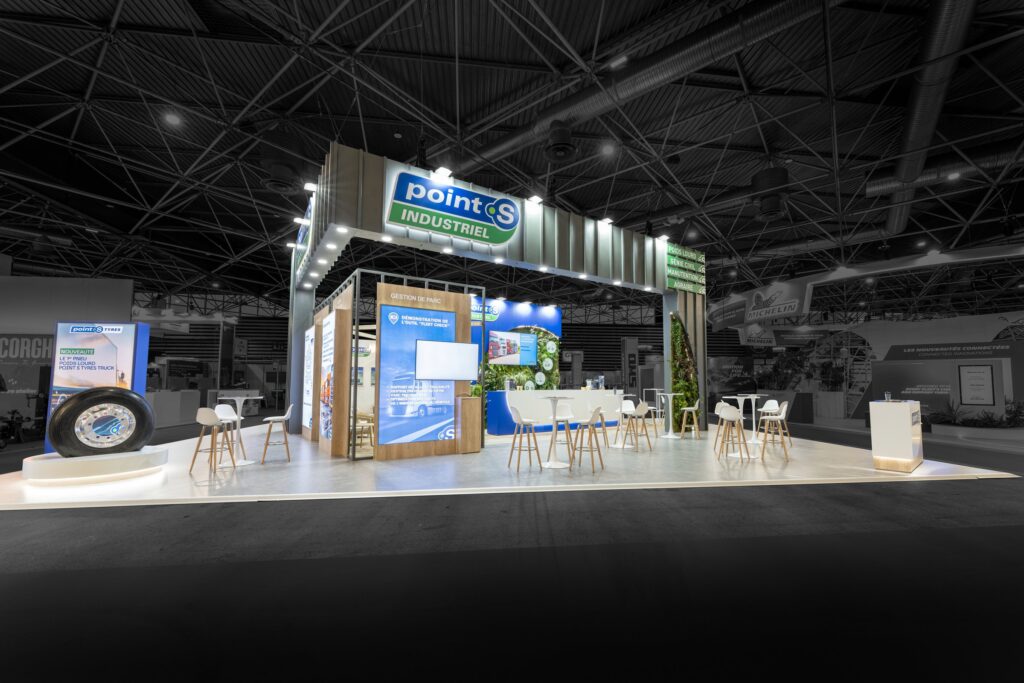
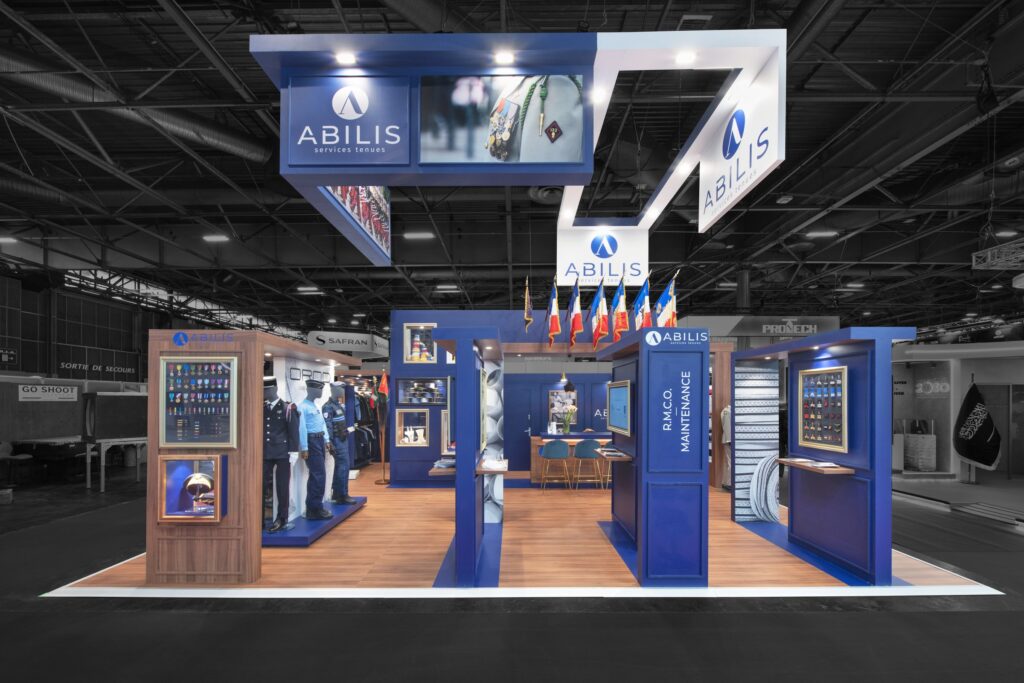
Stand sur mesure OLEO 100 sur plusieurs tailles pour plusieurs salons

2. Embrace upcycling for your decorative and promotional items

Upcycling involves transforming existing materials or objects into something new, more useful, or more aesthetically pleasing, rather than throwing them away. In the world of trade show booths, this practice is still too rare, but it is rapidly gaining ground.

Recycle and repurpose scraps

When building a booth, there are inevitably material scraps. These scraps can be turned into decorative elements or creative promotional materials, or simply sorted and recycled instead of thrown away.

Organizations like Muto or Valdelia collect waste from events such as trade shows and donate it to organizations that will repurpose it, giving it a second life.

💡 Some clients even incorporate this story into their booth: “This counter was made from materials recovered from our previous trade show,” and it resonates with visitors.

3. Reduce the environmental impact throughout the entire duration of the trade show, not just during manufacturing

Many exhibitors consider environmental sustainability when designing their booths, but then move on to other things.

But the environmental footprint of a trade show presence doesn’t end on the first day of the event.

Choose local plants and flowers… and rented ones

It may seem like a minor detail, but it perfectly illustrates an eco-friendly mindset: adding greenery to your booth.

More and more exhibitors are incorporating plants or floral arrangements to create a warm and memorable atmosphere—provided they do so thoughtfully.

The mistake to avoid: ordering imported cut flowers, delivered just for the event and thrown away on the last day. It may look pretty, but in practice, it’s far from eco-friendly.

Alternatives exist and are accessible:

  • Plant rentals: Several specialized providers offer rental packages for trade shows. The plants are delivered, set up, and then picked up at the end of the event. Zero waste, zero plant waste.
  • Local and seasonal flowers and plants: if you choose to buy rather than rent, opt for a local florist who sources their products through short supply chains. Seasonal flowers grown in France or Europe have a carbon footprint that is incomparable to roses flown in from Kenya or Colombia.
  • Reusable plants: succulents, hardy houseplants, potted herbs… These plants withstand transport and the duration of a trade show perfectly. After the event, they can be given to your team, donated to a charity, or replanted. A wonderful way to extend the gesture beyond the trade show.


And beyond the environmental impact, landscaping with local, natural plants is often much more visually authentic than artificial arrangements.

Limit the overproduction of promotional items and printed materials

It’s a classic scenario: you print 2,000 brochures, hand out 300, and the remaining 1,700 end up in the recycling bin (at best). The same goes for useless promotional items that end up in hotel trash cans.

Here are some practical alternatives:

  • Offer a QR code linking to a PDF brochure instead of a standard paper brochure
  • Choose useful, sustainable giveaways, ideally made locally
  • Print on demand, in reasonable quantities

Keep logistics and transportation in mind

Transporting booth components often accounts for a significant portion of a trade show’s carbon footprint.

Here are a few simple steps: consolidate deliveries, choose environmentally responsible carriers, and plan to return materials to the warehouse rather than leaving them on-site to be discarded.

Manage waste during the trade show

If space allows, set up recycling bins right on your booth, avoid using disposable water bottles for your team, and raise awareness among your staff at the trade show about these issues.

Note that more and more venues and organizers are installing water fountains throughout trade shows to encourage the use of reusable water bottles and reduce plastic bottle waste.

These are small steps, but over the course of a four-day trade show, they make a big difference!

Environmental responsibility at a booth is also a selling point

More and more buyers, decision-makers, and partners are paying attention to the environmental commitment of their suppliers and service providers.

An eco-designed booth sends a strong implicit message: we take our responsibilities seriously, not only in our products, but also in the way we present ourselves to the world.

At R2 Stand, we support our clients in designing custom-made, sustainable, and responsible booths from the initial briefing through to dismantling.

If you’d like your next booth to reflect your CSR commitments, contact our team to discuss it.
FAQ

Frequently Asked Questions About Eco-Friendly Booths

Does an eco-friendly booth cost more than a traditional booth?

Not necessarily; in fact, the opposite is often true in the long run.

A modular booth designed to be reused for several years requires an initial investment similar to that of a traditional booth, but its cost per trade show is significantly lower.

By avoiding the need to rebuild everything from scratch for each event, you achieve substantial savings while reducing your environmental impact.

Several materials stand out today for their environmental credentials: recycled aluminum (highly durable, lightweight, and infinitely recyclable), FSC- or PEFC-certified wood, recycled PET fabrics for flexible graphics, and MDF or particleboard panels made from engineered wood.

For printing, water-based or UV inks should be preferred over solvent-based inks.

The key is to discuss this with your exhibition design agency right from the initial briefing.

Several materials stand out today for their environmental credentials: recycled aluminum (highly durable, lightweight, and infinitely recyclable), FSC- or PEFC-certified wood, recycled PET fabrics for flexible graphics, and MDF or particleboard panels made from reconstituted wood.

For printing, water-based or UV inks are preferable to solvent-based inks.

The key is to discuss this with your exhibition design agency right from the initial briefing.

A few simple questions can help you quickly verify this:

  • Do you offer structures that can be reused from one event to the next?
  • Do you work with suppliers whose materials are certified?
  • Do you have a waste management policy for the end of the project?

A reputable exhibition design agency should be able to provide concrete answers to these questions, backed by examples of past projects or documented commitments. At R2 Stand, these elements are formalized in our CSR policy.

Absolutely. Eco-design doesn’t have to mean austerity. Today, sustainable materials offer aesthetic results that are just as high-quality as their conventional counterparts—and sometimes even more refined, such as raw wood or exposed aluminum structures, which lend a highly sought-after industrial charm.

The real challenge isn’t choosing between beauty and sustainability, but working with a designer who understands these constraints from the very start of the design process. That’s precisely where the expertise of an exhibition design agency makes all the difference.

For further reading…

How much does it cost to create a custom-made booth? The budget guide SOMMAIRE Temps de lecture : Participating in a trade show is an exceptional growth driver, but it is also a major investment. When drafting the specifications, a

Measuring the ROI of your trade show presence: Essential KPIs for your booth SOMMAIRE Temps de lecture : Participating in a trade show (renting space, designing a booth, travel expenses) represents a significant portion of the annual marketing budget. However,

In order for an exhibition design agency like R2 Stand to offer you a “wow” project that is relevant and profitable, it needs high-quality raw material: the brief (or specifications). An incomplete brief leads to unnecessary back-and-forth, creative disappointment, and